Monday, 9 March 2020

Health Issues Of Havanese Dogs


Like other canine breeds, havanese dogs have the potential to develop certain hereditary health issues. These include Legg-Calve-Perthes disease, eye problems, deafness, luxating patella, hypothyroidism, and heart issues.
  • Legg-Calve-Perthes disease generally affects small dog breeds. It is characterized by an inadequate supply to the femur head, causing it to degenerate.
  • Patellar luxation occurs when the knee cap pops out of its normal position. The problem may be mild to severe which may require surgery.
  • A common eye problem in Havanese dogs is cataract. Affected dogs have an opacity in the lens of their eyes that interfere with proper vision. Surgery may be necessary to correct the problem.
  • Puppies of the breed may be screened for congenital deafness using the BAER test. Unfortunately, there is no treatment for dogs that have the affliction.
If your dog has been diagnosed with a specific health issue, do sit down with your veterinarian Frisco, TX to talk about treatment options that are available for your pet.

Saturday, 7 March 2020

Helping your cat feel loved


Your cat is a big part of your life and you want her to feel as comfortable in your home as she possibly can. This means taking the time to think about what you can do to help her feel included and well-cared for.

Your feline friend needs to become a part of your family, so try to involve her in your daily activities. This may be as simple as meeting her needs, adding in some playtime, and then petting her while you relax with her on the couch. You could talk to her while you go about your daily chores and take the time to periodically interact with her throughout the day as well. Your attention and consistent care will help her know that she is valued in your household. Your local pet clinic Jacksonville, FL can offer additional suggestions. Make an appointment today!

Keeping your dog in your backyard


Your dog is a big part of your life and you want to make sure you are able to offer her plenty of love and attention in order to make the most of her time in your care. How can you make sure she is able to spend time outside while still staying in your backyard?

Your dog needs to be aware of the boundaries of your property so she can stay within them. Some dogs will be able to stay within these parameters with some training and plenty of supervision, while others will need physical reminders. Barriers, like a fence, can really help her stay safely engaged with activities in your backyard, so be sure to offer her plenty to do within this space so she isn’t looking elsewhere for interesting things to check out. For additional information, please contact your local vet Jacksonville FL

Friday, 6 March 2020

Watch Out for Snow Balls on Your Cat’s Feet


As winter starts to wind down there may still be a few more snow showers here and there. This may not be a problem for people, but don’t forget that your cat and other pets may find the snow a little difficult to walk through. Snow this time of year tends to be damper and can cause snow to buildup on your cat’s feet. These snow balls may form on the bottom of the paw pads, in between the paws/nails and up on the leg. They are more bothersome than painful. However, the snow that builds up on the paw pads and between the paws and nails could be cause discomfort. Make sure you keep an eye on your cat and help clear the snow balls or wipe your cat’s feet to rid the built up snow. It’s not necessary for your cat to wear snow shoes just check her feet routinely. For more tips, call your vet Fort Collins CO.

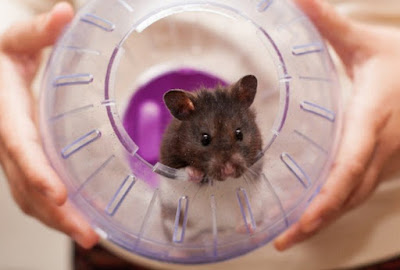
How To Use Hamster Ball Safely


veterinarian Pasadena, MD

A hamster ball can provide your pet hamster hours of fun and exercise.  The translucent plastic balls are usually designed to come as two separate halves that can be screwed together. When the hamster that is placed inside the ball moves, it causes the ball to roll across the floor. However, there are potential risks to the safety of hamsters when the balls are not used properly. Here are some safety precautions to remember before placing a pet hamster inside a hamster ball:

l  Get the right size and color for our pet as hamsters come in all sizes. Ideally, the size of the ball must match the adult size of your pet so it will be spacious enough for the hamster to stretch out and play.        

l  Only one hamster should be placed inside the ball at a time. Placing 2 or more hamsters inside the ball can possibly lead to injury or fights.

l  Choose a light-colored hamster ball over a dark-colored one because dark colors attract and trap more heat which can increase a hamster’s risk to heat stress or hyperthermia. A light-colored ball also makes it easier for you to see what y our pet is doing inside.

Sudden changes in your pet’s health and/or behavior should be brought to the attention of a veterinarian Pasadena, MD.

Thursday, 5 March 2020

Demodex Treatment


Demodex canis is a type of mite that is a normal skin inhabitant in most dogs. But when the dog’s immune system is compromised, the mites jump at the chance to multiply and cause skin problems. The good news is, demodex is not transmissible between dogs.

There are 2 forms of demodex in dogs --localized and generalized.

l  Localized form -- There are a few patches of bald skin that usually occur around the dog’s face.
l  Generalized form -- Affected dogs have multiple bald skin patches that spreads in any part of the dog’s body. The dog’s hair coat appears thin and sparse and there may be concurrent bacterial skin infections.

Dogs that are showing signs of infestation are assumed to be immuno-compromised, thus they will need extra care and attention to boost their immune system function and keep the mite population in check.

Any skin problem exhibited by your pet should be brought to the attention of a professional vet clinic Westminster MD.

Giving Your Dog a Bath


You might get away with spot cleaning your dog on occasion but at some point he may get smelly or dirty enough that he needs a full bath. And regular baths are essential to keeping his skin healthy. Whether your dog loves or hates baths, you need to be efficient. Gather all bath supplies together in one place. Brush your dog well to remove excess hair that could mat when wet. Wet your dog down with lukewarm water. Lather him up with dog-safe shampoo while avoiding the eyes, nose and mouth. Don’t forget to soap up the groin, the armpits, and in between the toes. Rinse your dog quickly but thoroughly, again with lukewarm water. Towel off your dog and brush him to remove tangles while taking care not to hurt him by pulling too hard. Keep him inside and warm until he is completely dry. For more information, contact your vet Fort Bragg NC.