Tuesday, 23 February 2021

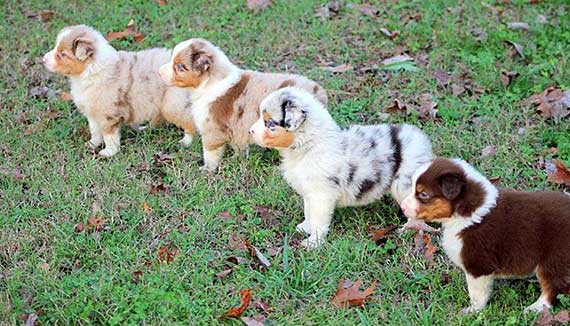
Different Color Coats of the Australian Shepherd

 Australian Shepherd Colors and Markings

In the canine world, the Australian Shepherd is one of the most recognized breeds. He’s often called the “Aussie” or “Ghost Eye Dog,” and is know for having quite the coat color pattern and eye color pattern. In general, most Aussies are of the merle color pattern, which consists of combinations of light and dark colors. Blue merle and red merle are the most common of the color patterns. Aussies; however, can come in just about any color. At one point, breeders tried for merle Aussies only. The soon discovered, though, that puppies with two merle parents had a 1 in 4 chance of being born deaf or blind. Today, all color patterns are accepted. In addition to the coat, the Aussie’s eyes can range in color. Brown, blue and amber are most common. Some eye colors can be split or even swirl. Some Aussies even have two different color eyes. Call your vets Raleigh, NC for more details on this breed.

Aegean Cats and Water


Do you live a lifestyle around the water? If so and you’re looking for a feline friend to share that with then check out the Aegean Cat. The Aegean loves to be around the water. He actually originated in Greece as one of the first domesticated cats. In fact, archeologists have discovered evidence that shows the Aegean cat’s presence on the island of Cyprus some 10,000 years ago. The Aegean has a lean body with a muscular build, medium feet and round paws. He is an avid fishermen and extremely comfortable around the water. Throughout the history of Greece, the Aegean cat was often found sitting on the docks fishing or begging for fish from the local fishermen. Besides a love for water, the Aegean has a love for people. He is an affectionate cat that gets along with people of all ages. For more details, call your animal hospital Wichita KS.

Monday, 22 February 2021

Ear Cleanings for Your Aegean Cat


Keeping your Aegean cat’s ears clean is part of her overall health and wellness. Not sure how to check the ears or even clean them? No worries, just give your vet a call. You should typically try and check your cat’s ears and clean them (if necessary) on a routine basis. Basic cleaning involves placing a little bit of liquid ear cleaner onto a cotton ball or piece of gauze. Some cat owners use mineral oil or hydrogen peroxide. Always ask your vet about anything you place in your cat’s ears. Gently fold your cat’s ear back and wipe away any debris or wax on the inside of the outer ear. Don’t rub the area. Do not stick anything inside your cat’s ear canal. If you notice any kind of discharge, odor, redness, swelling, bleeding, sensitivity, frequent head shaking or disorientation, call your nearest vets Derby to set up an exam.

Rough and Tough Canines


Are you looking for a rough and tough canine companion that can keep up with your life on the wild side and your love for the outdoors? If so, check out the Australian Cattle Dog. This breed was developed to endure long distance travel over rough, rugged terrain of Australia. Designed as a working dog, the Australian Cattle Dog is known for his ability to nip at the heels of cows and sheep and literally herd and drive them over long distances. Because of this instinctive nature, the Australian Cattle Dog loves to be on the go and he loves to play rough and tough. He also requires very little maintenance. He has a double coat with a top layer that is rain resistant. He requires little to no grooming although frequent baths are needed due to his active lifestyle. Call your animal hospital Derby for more information.

Possible Signs of Schiff-Sherrington Posture in Manx Cats

 Manx Cats এর ছবির ফলাফল

As some Manx cats and other breed feline age that sometime develop mobility issues.  For example, some cats develop conditions related to arthritis such as degenerative joint disease (DJD), and even something known as Schiff-Sherrington syndrome. If your Manx is having trouble moving around, contact your vet. Just because your Manx is having mobility trouble it does not mean she is suffering from a disease like Schiff-Sherrington. Your vet will need to examine your cat to determine the exact cause of immobility. Schiff-Sherrington typically occurs when the cat’s spinal cord is severed or cut across by a small lesion on the lower back. The lesion can occur due to trauma to the spine or even intervertebral disk disease, which is more common. Symptoms may include an unusual gait, inability to walk, inability to stand, rigidly extended forelimbs, and possible paralysis of the hind limbs. Talk with your animal hospital Aurora, CO to learn more.

Cage Cleaning For Gerbils Like the Light Red Fox

 Cage Cleaning For Gerbils Like the Light Red Fox এর ছবির ফলাফল

Keeping your Light Red Fox gerbil’s cage clean can help keep down the smell of the cage and help your gerbil feel fresh and clean. It’s recommended that a deep clean be done once a week. If you have more than one Light Red Fox gerbil, you should plan on cleaning the cage more often. In fact, you should never go more than two weeks without cleaning the cage or else your Light Red Fox gerbil may start to stink. When cleaning your Light Red Fox gerbil’s cage, make sure you remove him to a safe and secure location while you clean. Always save a small portion of the old bedding to mix in with the new so that your Light Red Fox gerbil will recognize his own scent and make himself at home. If the cage is particularly dirty or stained, use soap and water to wash it out. Ask your recommended pet clinic Aurora CO about using vinegar water to remove odors.

How To Treat Mushroom Poisoning in Dogs ?


As soon as you notice any sign of mushroom poisoning in your dog, you should go to the vet hospital immediately. The vet will work to lessen the effect of the toxin on the dog’s body. As soon as the dog becomes stable, the vet will then identify the poisonous mushroom by asking other experts. The local college or university could supply the information.

The vet will do various methods to flush out the toxins from the body:
  • Induce vomit to expel the mushroom in the stomach
  • Give activated charcoal to bind the toxin, and away from the digestive tract
  • Use gastric lavage to remove the mushroom in the stomach
  • Administer intravenous fluid to keep the optimum balance of water and electrolyte, and also to keep the dog hydrated

The vet's main goal is to remove the poison in the dog's body, as soon as possible. This is to prevent the toxin from further mixing in the bloodstream.

If your pet is showing any signs of toxicity bring him to the Vineyard Veterinary Hospital Temecula, CA immediately.